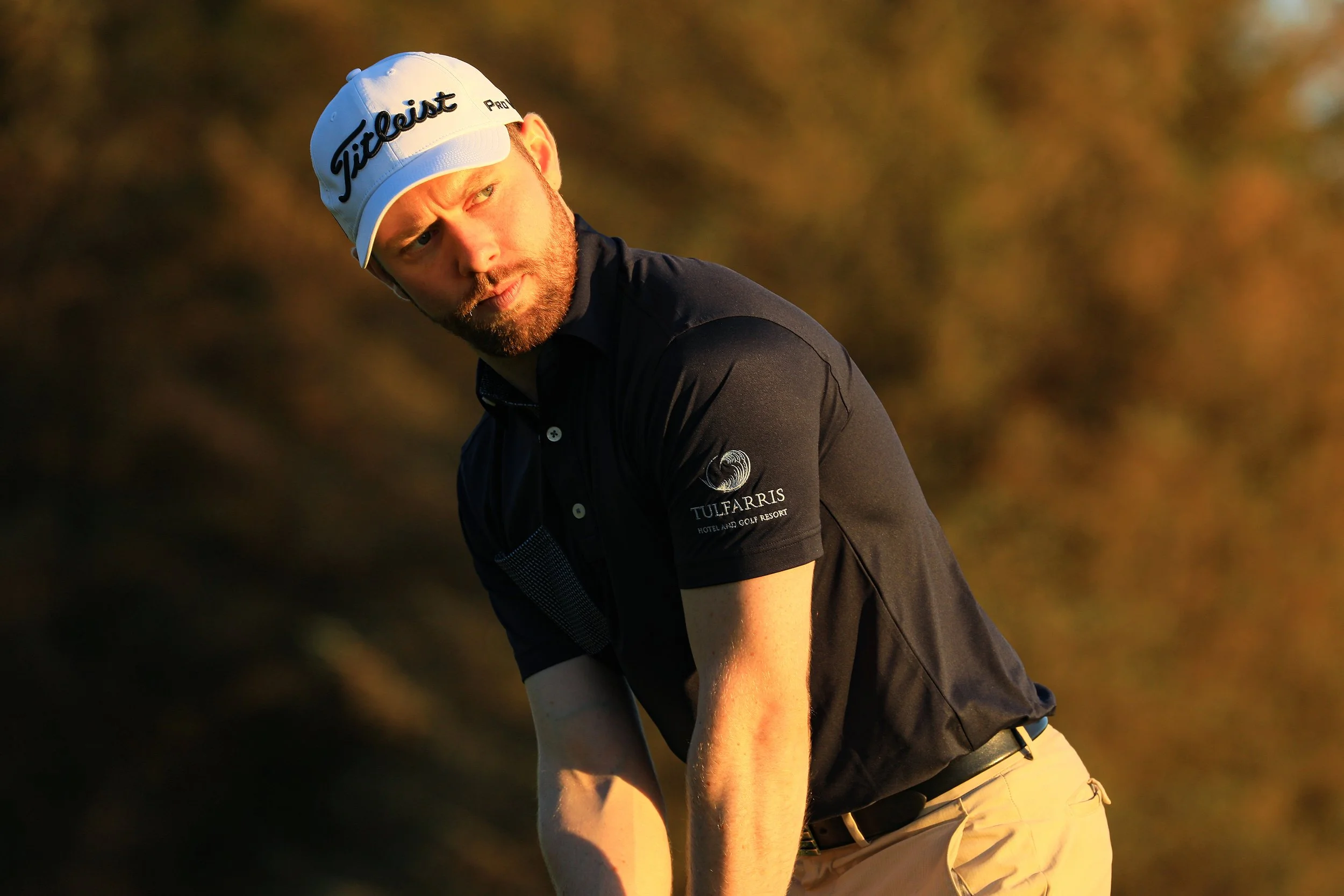
INSPIRATION
‘It’s not something out of Star Wars. It’s just a place where people know they’ll be respected’
LGBT Golf creates a safe space for people to express their love for the sport. Founder Gary Shaw explains why he’s driving the game forward to become more positive and inclusive
IF you’re in a place where you can’t be yourself how much time would you want to spend there? Would you strive to break down the barriers, or would you put them up? Gary Shaw chose the former.
As an openly gay male PGA Member, the London-based PGA Coach – operating out of West Middlesex Golf Club, as well as indoor facilities at SGC Wandsworth Common and Hampstead Heath – works hard to make all his clients feel welcome. That’s regardless of sexuality or gender identity.
He is also the founder of LGBT Golf, which creates spaces for LGBT+ people to come together and connect through the sport. Offering community, coaching and certification, Shaw’s vision is to show that anyone can play the game and thrive. It’s the only one of its type, led by a male gay PGA Professional, outside the United States.
Here, he explains the ethos behind LGBT Golf, the challenges he has faced as a gay man in golf and his determination to make a difference.
How did you get into golf and become a PGA Member?
My family played, so I was about eight or nine (probably younger in the garden!) when I started. I grew up in Ireland and played hurling at county level, so the movement and coordination transferred easily. By 12 or 13 I knew I loved golf, so I made it my primary sport. I represented Leinster a couple of times and reached a good standard by age 15, training with some of the best players in the country, including Shane Lowry.
Then life happened. At 17 I had a girlfriend and was sitting my exams, got distracted and drifted a bit. But, honestly, part of me stepped back because it didn’t feel like a place I could fully express myself. I knew I had some self-discovery to unfold.
I went to Maynooth University then, to study mathematics, geography and sociology. They had the Padraig Harrington Golf Scholarship, and I saw lads I used to beat getting on to it — that fired me up.
I had barely touched my clubs for about a year, got back into it and went on a run of hardcore practice and playing for two years. I won three senior scratch cups and set three course records within the space of about six months.
Then when I came out, I stepped away again. I needed time for myself.
I was working in digital marketing for a while after university and in 2017 – I was 27 at that stage – I turned pro and worked at Tullamore Golf Club, in the midlands of Ireland, under PGA Professional Bernard Quigley.
After successfully completing year one as a PGA Assistant, I [again] decided to move away because I felt the golf industry was doing poorly. It was before Covid and I just didn’t think this was the place to be, even though I enjoyed it for the most part.
I went back to digital marketing for four years and then, at the age of 32, I decided to return to The PGA to finish my degree and was back with Bernard Quigley at Naas, near Dublin. I wanted to build something myself — I’ve always had that entrepreneurial streak.
It was completely different. Golf was booming. We could barely keep up. Working in a digital marketing agency for four years had been wild, but this was next level busy!
What inspired you to launch LGBT Golf?
While training at Naas Golf Club, I set up Inclusive Golf, the first of its kind, in Kildare, Ireland. This catered to youth golfers with health challenges, such as autism, cerebral palsy, poor vision, cancer patients and more. It was an incredible experience to give them a space to come every couple of weeks and explore the game of golf without any judgement.
This sparked something in me, knowing my own community, LGBT+, often feels left out or unwelcome. When I moved to London, I decided to set up LGBT Golf. I was coaching at an indoor golf facility called Caddi Club at the time and the founder, Aaron, was very helpful and encouraging in setting it up. There are a couple of LGBT+ golf groups in the UK already, especially in London, but no gay male PGA Professionals leading a space across Europe. None.
It’s an untapped area, but for me it’s a place where I feel comfortable, where I meet people like me and we all feel safe in each other’s company.
Where would you like to take LGBT Golf?
The three main pillars are:
Community – ‘The Monthly’ gathering is a space at West Middlesex GC where LGBT golfers can come, play, meet people and feel fully welcomed. I’ve had a two-handicapper come along to one of them and he hadn’t really played since college. He is a really good golfer and he’s starting to get back into it. Seeing people return is powerful.
Coaching – Quality PGA coaching led by a gay male PGA Professional, where people know they can relax and be themselves and play their best golf!
Certification – A clear, recognisable, standard that clubs can adopt to show they’re committed to inclusion. Grassroots is the true starting point.
Have things changed from when you first moved away from golf? Or is there more to do?
Definitely. Visibility helps. For a young golfer to see an LGBT+ person thriving in the sport lets them know it’s possible and they can feel safe in the sport. They feel seen. These small actions matter.
Together in Golf and Respect in Golf are fantastic initiatives from England Golf, and [there is] Putt In Pride by Golf Ireland around Pride Month. It’s moving in the right direction. I think effective change begins at club level, where 99 per cent of golfers are based, and works its way through the system, while having strong visible leaders at the top to look up to.
What challenges have you faced as a gay man building a career in golf?
Sometimes I’d hold back from saying I was gay. Less out of shame but more out of practicality. Typically, conversations in the pro shop lead to questions such as: “Do you have a girlfriend? A wife? Kids?” Sometimes I just didn’t go there, particularly if I felt they held traditional values. It can be an exhausting conversation to navigate in the middle of your workday.
Avoiding those conversations isn’t ideal, but that’s the reality for a lot of people.
Is that one of the biggest barriers to helping people feel welcome in golf clubs – the fear of ‘how am I going to be perceived? Am I going to be welcome?’
Absolutely. If there’s no education or visible policy that the club welcomes all types of people, LGBT+ golfers will often mute their appearance or avoid topics surrounding their sexual orientation or gender identity, for peace of mind.
Can you give us examples of organisations that are inclusive and welcoming?
Here in London, there are a couple of groups. Out2Golf has been around since about 1996 welcoming LGBT golfers, and they meet up every month.
GIGS – Girls in Golf Society – is a big success. From what I can see, England Golf and Golf Ireland are pushing to move things forward. I think they’re doing a good job. But it’s got to start at the club level, though. It needs to get into the roots.
What does genuine inclusion look like at club level?
For me, it’s simple: treat people with respect. It’s not special or unusual. It’s not rewriting the game. It’s levelling it.
Small comments matter. If you’re in a locker room and someone says something like, “oh, your shoes look gay”, they, probably unknowingly, could be pushing an LGBT+ person straight back into their bubble and making them feel less-than or unsafe. Awareness takes time because you’re asking hundreds of people at a club to think differently — but it matters.
What can clubs do to be more welcoming?
One idea I’m building with LGBT Golf is a certification — something a club can display that signals, clearly, “Everyone is welcome here”. If you see that on a wall when you walk in or displayed on the website, you relax immediately and let your guard down. You know the standard of respect expected, and if any issues arise, they will be taken seriously.
That kind of visible commitment would make a huge difference.
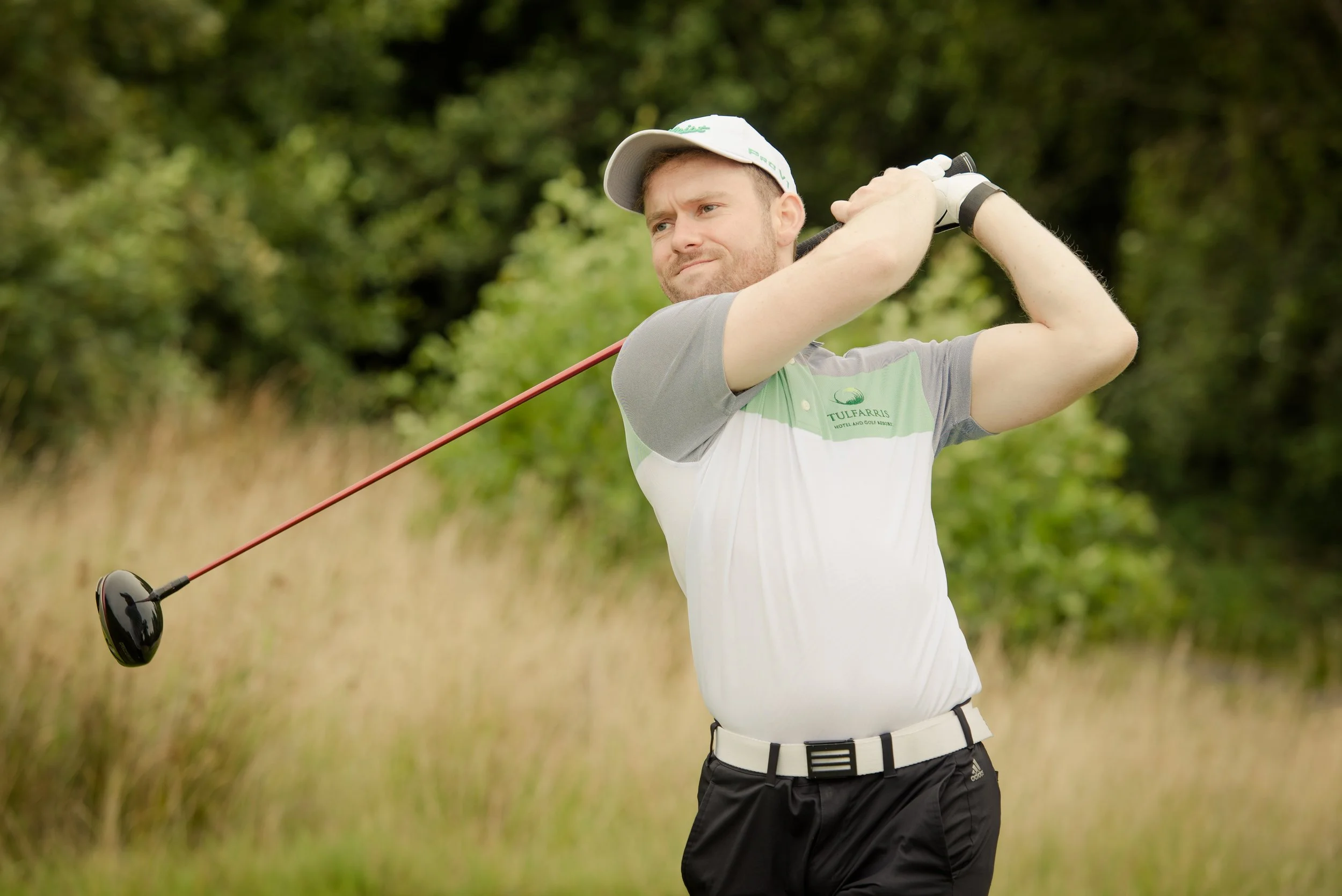
“It’s an untapped area, but for me it’s a place where I feel comfortable, where I meet people like me, and we all feel safe in each other’s company”
Could the media and wider golf industry do more to support LGBT voices in golf?
I’ll always remember the first document I signed at The PGA headquarters in The Belfry in 2017. It asked about gender identity, sexual orientation — man, woman, non-conforming, trans, gay, bisexual etc. I had never seen that in a workplace or university before. It was a huge positive and immediately I felt seen and welcomed. Small, little things like that make a huge difference.
Most change happens, and is possible, at grassroots, which can then trickle up through the game over time.
How do you balance coaching with running LGBT Golf?
LGBT Golf is very much in its infancy. It’s small and manageable. People reach out, join the monthly meet-ups, ask questions. I want it to grow, because it aligns perfectly with what I love doing: coaching people, helping them progress, helping them feel safe enough to thrive and be themselves on the course.
I believe I’ve had coaching tendencies throughout my life – I also qualified as a life coach while working in digital marketing. But I balance work and continuous studies quite well. Training to become a PGA Professional, studying and working in a busy pro shop for three years teaches you how to manage your time effectively!
What does an inclusive golf world look like?
It’s nothing unusual or something out of Star Wars. Just a place where people know they’ll be respected — gay, straight, trans, doesn’t matter.
Little abrasions, such as homophobic slurs, do matter and add up. Self-awareness is key.
What advice would you give young LGBT people entering golf?
Go for it. The space isn’t perfect yet, but it’s moving in that direction.
One challenge is representation. I feel there’s a large gap between lesbian golfers and gay male golfers – mostly down to representation.
The LPGA Tour has multiple open lesbian golfers, whereas there are currently zero on the men’s PGA Tour. There was only ever one on the men’s side: Tadd Fujikawa in 2018, who’s no longer on tour.
Is it fair to say we need role models in this space?
Representation drives belonging. People see themselves in the role model and believe they can do it too. I’m sure Tiger’s success inspired many black golfers to begin playing the game. If someone at his level were to be openly LGBT+, it would shake up the sport and move it decades forward.
Part of why I stepped up is so golfers could see a gay male PGA Pro who is coaching and competing in the sport — doing fine and visible. Someone has to move the dial.
If you have any enquiries, you can reach Gary by emailing: gary@garyshawgolf.com
To learn more about LGBT Golf, please visit www.lgbt.golf